


Art therapy
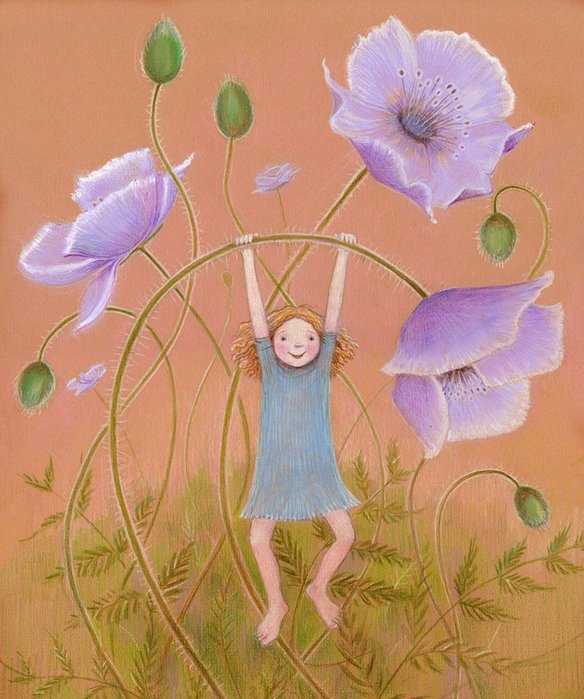
After you have depicted your favorite and least favorite colors, let’s draw a cycle of paintings “Seasons”. Take four sheets of paper and name them “Spring”, “Summer”, “Autumn” and “Winter”. Choose the time of the year you would like to start with, and sit quietly for a while thinking about the chosen time. Let the memories, images and pictures associated with this season float before your mind’s eye. Perhaps you will have some feelings and sensations: the heat of the summer sun or the frost of a winter snowstorm. When your imagination runs wild, grab a brush and start painting. Try to paint all four paintings in one session to really feel the difference between spring, summer, autumn and winter conditions. When you’re done, let the pictures dry, write your name and number on the back, and put them in a folder. After one or two days, you can proceed to the next series of paintings. This time you will depict your feelings. I have already told you how to depict feelings in the language of lines. Now we will learn how to express feelings with color. Choose the feelings you want to draw. I usually suggest that students name the paintings Joy, Anger, Fear, Courage, Love, Strength, Tenderness, Laughter, Longing, Coquetry, Naivety. .. Or choose other feelings of your own free will. Maybe you can draw a whole gamut of feelings in one go. Or delve into a single feeling and dedicate an entire session to it. There is no right or wrong way here: trust your intuition – it guides your brush! Listen to the voice of the soul: after all, it is she who speaks to you in the language of color! When you draw all the feelings that were eager to splash out on paper, take out all your work and spread it on the table. You will have three sets of pictures: 1. Pleasant and unpleasant colors. 2. Seasons. 3. Feelings. Now let’s do a little research. Look at the first set and compare it with the third. What do you notice? Are pleasant colors associated with pleasant feelings? Conversely, have you used your least favorite colors to depict feelings that you consider negative? Then add a second set. What colors prevail in what seasons? Is it related to your attitude to this or that season? Do not rush with answers: the soul does not like to rush. Dive into the paintings. Let them speak to you in their own language. And then they will tell a lot about your inner world – even if you cannot fully translate their story into the language of words. Let’s delve deeper into the language of color. At first, we were content with dividing colors into pleasant and unpleasant – but now we will look for more subtle differences. What colors excite and energize you? And what, on the contrary, relax and soothe? What causes anxiety? Romance? irony? Perplexity? What combinations seem harmonious, contrasting, incompatible, funny to you? And finally, which of these colors would you like to see in your clothes and accessories? When you are done with your first introduction to the language of color, grab a notepad and write down your observations. What new things have you learned about yourself? I recommend that you draw your favorite and least favorite colors again in a few days – and compare the new paintings with the old ones. You may find that your color preferences have changed. Now we can move from the subjective laws of color to the objective ones. We will deal with this shortly. However, the old brushes will no longer be enough for us. If you want to get serious about painting, get at least four new brushes: two bristle brushes (thick and thin) and two kolinsky (also thick and thin). In no case do not buy squirrel brushes! They are much cheaper, but they are completely unsuitable for artists because of their rudeness and “sprawling”. It is impossible to draw a truly elegant and thin line with a squirrel brush. Start using quality tools right away. If you can’t find kolinsky brushes, buy synthetic ones. Although, in my opinion, nothing compares to a real column, only they can depict an endless variety of strokes: from the finest hair to the oval petal in the style of the Chinese school. Paints must also be of high quality. Acrylics are best suited: firstly, they are brighter and juicier than gouache, and secondly, they can be used to draw not only on paper, but also on other surfaces – fabric, leather, wood. If you want to paint a scarf, jewelry box or belt – acrylic paints are perfect. The main thing is not to forget to iron the fabric with a hot iron after that, and varnish the box and bracelet. If your soul asks for creativity, you can paint something right now. And when you study the objective laws of color, you will be able to create real man-made masterpieces!
Author: Alina Daniel
Source: http://shkolazhizni.ru/archive/0/n-41573/
© Shkolazhizni.ru
Articles on the history, fundamentals, applications, and various forms of art therapy can be found here.
Only the best offers, interesting company news, useful innovations and no spam!