


Art therapy
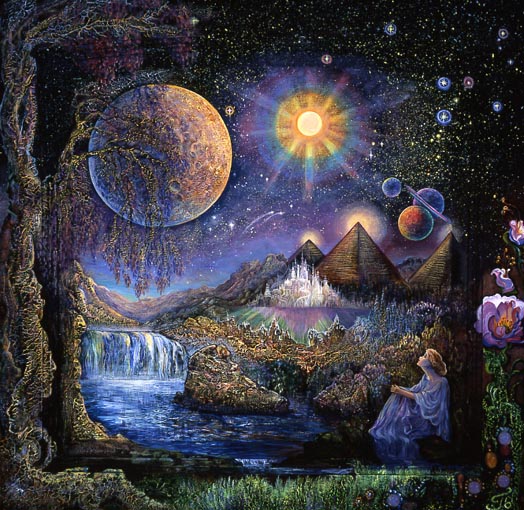
Analyzing the fairy tales that you yourself or your seminarians wrote, you need to start from some kind of intelligible scheme, otherwise the discussion may turn into chaos and the necessary conclusions will not be drawn.
There are many schemes for analyzing fairy tales, with the help of which you can analyze the received fairy tale material, but today I want to bring to your attention the most basic, and therefore the simplest scheme for analyzing a fairy tale.
So, in order not to be unfounded and to feel the work properly, you need to write a fairy tale right now, let it be small, as they say, without taking your hands off the sheet.
To make it easier to write a fairy tale… What to write a fairy tale about, the person who was taken by surprise by our task thinks. To facilitate the work of the imagination when writing a fairy tale, I want to share with you Borges’ theory about the existence of only four types of fairy tale plots in the entire volume of world artistic culture.
So, Jorge Luis Borges believed that there are four plots of fairy tales in the world, here they are:
1. The story of a fortified (besieged) city,
2.The plot of the return.
3.Syuzhet about the search.
4. The story of the suicide (sacrifice) of God
Of course, the fourth plot of the fairy tale stands apart in culture and is found in its pure form – in myths, religious texts and folk epics.
To facilitate understanding of his thought, Borges said that, in general, all these four plots of fairy tales (and there are not many of them anyway) can be generally reduced to two. Attention, here they are:
1. Stories about a Woman and a Man,
2. Stories about a Man and his Way.
***
The writer Christopher Booker, who devoted more than one of his works to the study of plots in world culture, offered his list of seven main themes on which all fairy tales and fictions are based. Argue with Borges?
So, Christopher Booker’s list:
1. The story about the jump of the protagonist “from rags to riches”,
2.Story-Adventure (a long and difficult journey to achieve the elusive),
3. The plot “There and back” (attempts of the hero, torn from the familiar world, to return home)
4. Plot-Comedy or anecdote (the only goal is psychotherapeutic, that is, to make you laugh),
5. Plot-Tragedy (the plot is about the death of the hero due to his inherent character flaws that he could not cope with),
6. Resurrection (resurrection). The plot of how a miracle delivered the hero from captivity, the power of dark forces gravitating over him),
7.Syuzhet about the victory over the Beast.
So, were you inspired to write your own fairy tale plot?
Do not forget that this tale is just an exercise, and you will write many more tales.
So the story is written.
Well, now analyze your fairy tale according to the points of analysis given below. We single out each of the points from the fabulous text, formulate it in our own words – briefly and write it down on a separate sheet.
Fairy tale analysis scheme. Point one Find the main theme (and possibly several additional) themes of the fairy tale.
Fairy tale analysis scheme. Point two Describe abstractly the main character of the tale.
Fairy tale analysis scheme. Point three List his personal qualities (one quality is possible – basic)
Fairy tale analysis scheme. Point four What is the relationship between the main character and the rest of the characters in the tale. Group relationships by similarity. (For example, relations with those are hostile, with those they are friendly, with those they are indifferent. From “those” the hero wants something, and “those” themselves want something from the hero ).
Fairy tale analysis scheme. Point Five List schematically, using concise formulations, the main events of the fairy tale – make up a very concise plot of the fairy tale. For example: Meeting, Loss, Imprisonment, Escape, Journey, Trials, Recognition, Return…)
Fairy tale analysis scheme. Point Six List in a separate list all the difficulties that the hero of the fairy tale faces (if possible, also using abstract terms. (For example: not being recognized by relatives, rejection, persecution…)
Fairy tale analysis scheme. Point Seven List the means by which the hero struggles with difficulties.
Fairy tale analysis scheme. Point Eight List the resources available to the hero (they may overlap with the previous point)
Fairy tale analysis scheme. Point Nine List those resources that the hero does not have (missing resources).
Fairy tale analysis scheme. Point Ten List the feelings and emotions that are present in the fairy tale.
Fairy tale analysis scheme. Point Eleven Find stable negative cultural and mythological symbols and images (archetypes) that are present in the fairy tale
Fairy tale analysis scheme. Point Twelfth Find stable positive cultural and mythological symbols and images (archetypes) that are present in the fairy tale
***
The above scheme for analyzing a fairy tale can also be used as a kind of “simulator”-cheat sheet for those who find it rather difficult to take and write a fairy tale “from scratch”.
However, you should not get carried away with working on a cheat sheet – following any schemes somewhat impoverishes the imagination and blocks the free flow of the Unconscious.
Elena Nazarenko
Articles on the history, fundamentals, applications, and various forms of art therapy can be found here.
Only the best offers, interesting company news, useful innovations and no spam!