


Art therapy
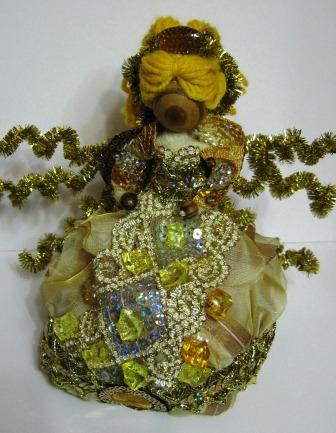
Sun, dancing sun maiden
There is reason to believe that the sun in mythology was considered a symbol of the female. The sun was considered a woman among the Hittites and among the Georgians, Traliytsy, Malaysians, Eskimos and some Russian tribes.
The sun was represented in the form of a woman and was portrayed by a woman on a deer.
In the ancient Eastern tradition, Sunday is a day dedicated to the sun, the Drevlyans imagined the personification of Sunday in the form of a woman and worshiped the image of a woman on this day, since in ancient times the deity was considered female, according to which the lord of the underworld lived in the west, and the rising sun acquired a female image.
Among European peoples with an inexpressive image of the sun god, there could be a Hittite sun goddess, who was the wife of the thunder god, and thunderstorms are the serpent of the underworld.
In the Rigveda there is a motif of marriage to the sun goddess Surya.
In Mongolian and Indian folklore, there is a connection between a girl named Sunshine and a man named Moon.
Lithuanian folklore is rich in songs in which the sun is represented as a bride. Judging by these songs, it is not clear who is the betrothed of the solar maiden, and the wedding is not entirely successful, since the girl was supposed to marry the morning star, but some ‘sons of God’ also woo her, but she goes to the Moon, and this is a bull – the moon, one of the incarnations of the god of the earth – the thunder god, the god of the underworld. The wedding takes place in the west, ‘beyond the sea’, therefore, the sun-maiden goes to the lord of the underworld.
Another circumstance speaks for the fact that once the sun was represented in a female form, in Greek myths there was a belief that on certain days of the year the sun dances and dances at sunrise.
The ancient Indian goddess of the rising sun Ushas also dances. The rituals from the Neolithic religion, which reached antiquity, were characterized by frantic dances, it is understandable why one of the early Christian righteous dreamed of an evil spirit in the form of a dancing woman. Probably, the dances of women depicting a solar maiden gave rise to the idea of a dancing sun. When Persephone learned that she would be released from the dungeon to her mother, she danced for joy, apparently, this scene was imitated in cult rituals, especially in spring, which is why the belief about the dancing sun dates this event mainly to Easter. Until our time, in the ritual dances of some peoples echoes of the ancient myth of the sun maiden appearing in the east appear. At the spring festivities the girls dance with their faces to the east, and among one of the Indian tribes the menstruating girls dance with their faces to the east.
The female image of the sun is precisely a girl, not a woman. She is always represented as a bride or daughter, but not a matron, because the sky goddess acts as the mother of the sun.
The Latvians call dawn ‘the daughter of the sky’, and in Lithuanian songs the sun is called ‘the daughter of God’, in these songs the character ‘solar mother’ appears, Aditi, the highest female deity in the Rigveda, is called ‘the mother of the sun’, hence the custom at spring festivities to bury a female effigy, in which one can see the personification of one of the annual phases of the goddess, in Albania this rite is called ‘the funeral of the mother of the sun’.
In Egyptian mythology, the “heavenly cow” was considered the mother of the sun, in the same mythology, the cow is the personification of the sky goddess. In Slavic tales, the solar mother is spoken of as a spinner of things, ‘prophetic’ and ‘spinning’ characteristics of the early agricultural goddess of the sky.
If the sky goddess is the mother of the sun-maiden, who is held captive by the god of the underworld, the origin of the ancient Greek myth that the ruler of the underworld Hades, or Hades, kidnapped the daughter of Demeter, the beautiful Persephone, who then had to stay alternately with her husband in underworld and mother in the sky.
The pagan Lithuanians had a belief that once the sun was enclosed in a tower, and in many traditions the dwelling of the god of the underworld is represented by a castle, a fortress, a fortified house, a tower. Hence the widespread fairy tale story about a maiden imprisoned by her father in a tower.
In the Rig Veda, Savitar is sometimes identified with the sun, sometimes called his father. At the same time, Savitar has some features that encourage him to see the Aryan god of the underworld in him, he is distinguished by wisdom, rules the world, points the way to the waters, he is characterized by trinity. His wife Savitri in the Vedic interpretation, the image of a worthy wife, the names Savitar and Savitri are associated with the Sanskrit ‘to give birth’. If this etymology is correct, then, apparently, the prototype of this married couple was the Neolithic mother and father of the world, the Great Goddess and the god of the earth. If this is so, then it turns out that the god of the underworld was the father of the goddess of the sun.
Among the Sumerians and after Sumerian Mesopotamia, the moon god was considered the father of the sun god. As a result of this, the daughter turned out to be the concubine of her father, which should not be surprising, since such phenomena are common in the ancient myths of different peoples.
The most ancient myth about the connection of the sun with the lord of the underworld was bizarrely transformed in ancient Egyptian cult representations. The scarab, which rolls a dung ball, was associated with the god of the underworld Khepera, rolling the sun into the sky, who died in the next world and now appears before him, therefore, a stone figurine of a scarab was placed in the mummy of the deceased in place of the heart.
Indo-European pagan beliefs that are negatively related to the idea of the god of the underworld, the west, the sunset and the moment of sunrise. But the Neolithic myth of the fiery sun-maiden, miraculously falling from the underworld to heaven, and then returning to the dungeon again, served as the source of the image of the Indo-European goddess of the dawn. This is evidenced by the name and some of its features, the images of the female deities of the Neolithic religion, the goddess of the sun and the goddess of the sky mixed up.
Among the Arabs, the goddess of the sun was considered a destructive being, which in the early agricultural religion was a characteristic not of her, but of the mother, the goddess of heaven.
The Japanese Ameterasu bears the features of both of these deities, she is both the supreme goddess and the goddess of the rising sun.
So, we come to the conclusion about the content of the oldest cosmogonic myth that explains the sunrise and sunset: a deer (a creature belonging to the earth) stole the sun-maiden in the underworld and fled with her to heaven. The enraged lord of the underworld chased the deer, slew it and brought his captive back.
1.

2.

Articles on the history, fundamentals, applications, and various forms of art therapy can be found here.
Only the best offers, interesting company news, useful innovations and no spam!