


Art therapy
This is a quote from DraCat’s post The original post Fairy tales to help you overcome your fear
 In this article, we will consider the main types and manifestations of children’s fears that teachers and school psychologists may encounter in their work. In order to find resources for coping with fear, we will turn to Russian and British folklore, the images of Babai and the boogeyman, and also, using the example of modern literary sources, we will demonstrate the main methods of working with children’s fears.
Published in the Academic Bulletin – 2012 – No. 1 (5) – pp. 59-67.
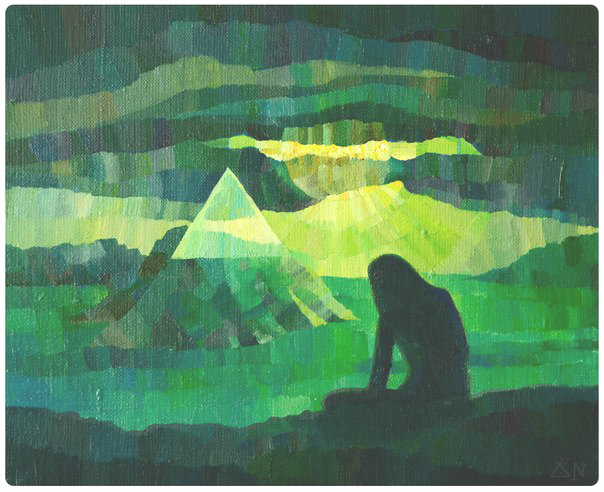
Illustrated by Juralga Nord .
Fear is the basic emotional reaction of a person, which occurs as a result of the objectification of anxiety under the influence of real, imagined or suggested danger, a threat to his biological or social existence. Fear manifests itself simultaneously in four planes:
1) somatic (physiological) signs (changes in breathing, increased heart rate, sweating of the hands, and others),
2) subjective (emotional) manifestations (experiences of anxiety, fear or horror),
3) features of cognitive functioning (fixation on the threat, “negative thinking”) and, finally,
4) a certain behavioral repertoire (avoidant, attacking or freezing reaction, calls for help)[12] .
Subject fears are a necessary part of the instinct of self-preservation. But the so-called “imposed” and “obsessive” fears, as well as nightmares, can significantly complicate the life of both an adult and a child. Despite the fact that imposed fears have long been considered the lot of kids, today psychologists and class teachers are increasingly faced with fears in school-age children. Moreover, recent studies show that most adults are also prone to fears, many of which have remained with them from childhood: “Children’s fear of dark rooms does not leave 11% of adults, and almost 6% of respondents are afraid of big dogs. 4% of respondents remain afraid of dentists”[13] . Therefore, it is extremely important to be attentive to children’s fears and help students cope with them.
Schoolchildren often take some of the fears of an earlier period with them to school: fear of the dark, being alone, transport, people of different professions (for example, doctors) and others. Entering school poses new challenges for the student and he may have fears associated with the processes of socialization and learning. Such fears are called school fears. Usually, they are associated with fears of doing something wrong, getting a negative assessment, being punished by parents [7]. There are also fears, the cause of which is not directly related to the school, but has a negative impact on the learning process: for example, the fear of leaving home and separation from parents[5].
All fears can be divided into the following groups: medical (pain, injections, doctors, diseases, blood), physical damage (transport, fire, elements, war, sounds), fear of death (to die), animals and fairy tale characters, nightmares and darkness , social fears (people, loneliness, being late, children, punishments), spatial (height, water, closed space). There are diagnostic methods that allow children to identify the number of fears from various groups, such as “tell me if you are afraid or not”, “that I have a terrible dream, or what I am afraid of during the day” or “fears in the houses” A.I. Zakharov (see [7],[11] ).
Each fear, according to the strength of manifestation and influence on the life of the child, can be attributed to the usual, age-related or pathological level of fear [3]. A.I. Zakharov writes [7]: “Ordinary fear is short-lived, reversible, disappears with age, does not deeply affect a person’s value orientations, does not significantly affect his character and behavior. Pathological fear is indicated by a protracted, obsessive, difficult to reverse course, involuntariness, that is, a complete lack of control on the part of consciousness, an adverse effect on a person’s adaptation to social reality. It is also considered neuropathogenic that a child has a large number of fears of various types and groups at once.
Children growing up in different cultural and material conditions often have similar fears [3]. From which we can conclude that a certain stage in the maturation of the child’s psyche can become the basis for the manifestation of the same fears. That is why psychoanalysts (M. Klein, W.R. Bion) in their work paid special attention to working with children’s fears. According to them, adult thinking arises as a result of the control of emotional experience, including fear.[16] , but how a child copes with his fears in childhood will determine his characteristics in older age. Psychoanalysts pay special attention to frightening images in works of art. Children’s fairy tales, rhymes and horror stories allow the child to face frightening situations in a safe environment and survive, rethink fear, develop their own ways to adequately respond to them. A similar function is performed by the immersion method, or implosion, used in cognitive behavioral therapy to develop, first in the patient’s imagination, and then in reality, the patient’s ways of coping with pathological fear [8].
Despite the similar essence of the methods, fairy tales are of particular importance for children, due to the magic of their thinking and the power of unconscious processes. Fairytale plots have children’s games, dreams (not only nightmarish content), stories. Therefore, we turn to frightening images in folklore.
Koshchei the Immortal and Baba Yaga are usually referred to as incarnations of the threat of physical death or loss of the mental Self. The British Humpty Dumpty is in some ways its kin, as they embody the threat of disintegration[16] , as well as the product of modern folklore – a black hand. For the last 100-200 years, characters have appeared in fairy tales and folklore who not only embody the object of fear, but in themselves are the embodiment of fear or even fears. In Russian culture, such characters include Babai from Russian lullabies:
Bye, bye, bye, bye,
Grandma’s evening came.
Babai evening came
He asked: Give Lenochka.
No, we will not give Lena,
We need Lena ourselves [6].
A character who sometimes scares with separation, sometimes acts as a terrible (for unknown reasons) grandfather. At the same time, as Zh. Badalyan notes: “the image of Babai is usually relatively negative, scary, but at the same time charismatic and instrumental in maintaining public order” [4]. Often children’s imposed fears are rooted in parental prohibitions.[7,12] . The only way to cope with our Babai is to behave well and go to bed on time.
More diverse ways to overcome fear can be found by examining the image of Babai’s British relative, the boogeyman, who has entered not only children’s literature, but also modern horror culture (through S. King’s book), scaring adults already. “If you’re bad, the bugieman will come and get you!” British people say to their children. That is, if you were bad, then the boogeyman will come and take the child. The boogeyman can wait for the baby in the most unexpected places at home: under the bed, in the closet, hiding in any shade. It is impossible to say who he is more – a boogeyman or a boogeywoman – he does not have a gender and any particular appearance. He may appear in the form of a terrible alien creature, a terrible old neighbor with crooked teeth, or a famous serial killer (Freddy Krueger is also a kind of boogeyman of modern culture).
Like Babai, the boogeyman is a fairly young character in folklore. The first use of this name is attributed to 1836 as a synonym for the word “devil” [9]. There are different versions of the etymology of the name “bogeyman”. Ryan Tuccinardi suggests that the boogeyman came from “bugis” (bugis) – the names of Indonesian and Malaysian pirates, whose appearance in colonial England, sailors frightened children [1]. However, in searching for the roots of the boogeyman, it is useful to look directly at the mythology of the British Isles. Middle English has the word bugge for a frightening ghost. The words boggart, bogy, bugbear, the Welsh bwg and the German bogge may also have a similar origin – all these are the names of various types of goblins and hobgoblins who have taken the habit of scaring people. The Scottish word bogle, which also refers to a ghost, may also be related. Originating in the fifteenth and sixteenth centuries, the word was popularized in English literature by Robert Burns and Walter Scott.
The modern boogeyman, without any particular appearance and gender, is the perfect embodiment of childhood fear. In this sense, the boggart, described by Joan Rowling in one of the Harry Potter books, looks more like a bogeyman than a boggart from classic English folklore:
“Boggarts love the dark,” Lupin said. – And most often they hide in the wardrobe, under the bed, in the drawer under the washbasin, I found one in the case of a grandfather clock. This one just showed up yesterday. I asked the principal to leave it for our lesson today. Who will answer what a boggart is?
Hermione raised her hand.
– Boggart is a ghost that changes its appearance. It turns into what a person is most afraid of.”[14] .
Boggarts from classic English folklore, though notable for their unkind disposition, did not possess the abilities of a werewolf. Their favorite pastime is to sneak into the bedroom and run a cold and wet paw over the face of a sleeper, or simply pull the blanket off the floor.[10] – that’s all.
But other horror stories – bogey (bogey) have the ability to take on a different look. They are one of the subspecies of hobgoblins. The latter are domestic fairies (fairies), in general, very peaceful (if they are not offended). All types of fairies follow their own special moral standards, so it is not surprising that most of them are difficult to unequivocally attribute to good or evil spirits. So, for example, bubakhs (another subspecies of hobgoblins) are described either as a good domestic patron spirit, or as a frightening ghost[10] :
“Getting into his clutches is no small matter, because he is able to drag people through the air. For this purpose, restless spirits sometimes use bubakhs, who cannot sleep, worrying about the treasures they have buried. Having found a person who will agree to dig up the treasure, such a spirit attracts a bubakh to transfer the mortal to a secret place. It is noteworthy that it is precisely such a fairy in France that they call Tapestry and it is they who scare children: “The tapestry will carry you away, the tapestry will eat you!”.
Like bougs, boges are difficult to classify as good or evil faeries, rather they are mischievous. “They [boges] all have the ability to shapeshift, many have cold and wet fingers and yellow eyes that glow in the dark.”[10] . They say that in their real form, bogey look like a ball of dust and therefore it is difficult to see them in the shadows. To see the bogey against his will, you need to have time to look at him through a hole from a knot in a piece of wood – then you can see the sparkle in his eyes before he has time to escape.
Bogle [2] is the most vicious variety of bogey. However, they always act fairly, punishing liars, thieves and murderers, mostly by intimidating to death, stealing the “catch” of the thief or fooling the scammers.
Bogie’s favorite prank is to jump on a man from behind and pinch his eyes.[10] . They also like to walk along deserted roads, taking the form of black dogs. It is noteworthy that the book “Harry Potter and the Prisoner of Azkaban” begins with Harry’s meeting with a huge sinister black dog, which, however, later turns out to be the bestial form of his godfather. It is not known how coincidental such a coincidence is, but this offshoot of the plot is consonant with the theme of the fight against fear, permeating the entire work.
The combination of guardian and threat traits in bogey speaks in favor of the assertion that bogey is a kind of exteriorization of fear, which, by its biological function, is designed to protect a person from threat. Additional character traits of the bogey only confirm this opinion. Thus, closing the eyes is not only a frightening action, but also a frequent reaction of the child to fear, internalized “don’t look!” with parents closing their eyes.
There is a special kind of bogey – bogey-beast (bogey-beast) – which appears to children in the form of a terrible beast. At the same time, bogey-beast keeps children away from dangerous places. Here we again see a combination of both good-guarding and evil-frightening traits, reflecting the significance of fear in a child’s life. “On the Isle of Wight, a bogey beast in the form of a huge hairy caterpillar guards the gooseberry bushes. He is capable of causing harm only when attention is paid to him. Therefore, in order to protect yourself from the god-beast, you need to think not about him, but about something else”[10] . This is the first of the ways that folklore offers us to avoid the unpleasant pranks of the bogey, and his later incarnation – the boogeyman – too. As well as the negative effects of fear.
The main difference between the bogey-beast and the modern boogeyman from the usual bogey is precisely their scary-educational function. Both boogie-beast and boogeyman appear only to children or adults who have not overcome their fears (as in the 2005 film “Bogeyman”).
And so, if Babai, boogeyman, bogle, bogey, bubahi, etc., characters of folklore evoke in a child the fears characteristic of his age, then what means of dealing with fear can children’s literature offer us? Are they really effective? How to apply them in work with children?
1. The first method has already been mentioned above: in order to escape from the god-beast, you need to think about something else. Unfortunately, despite the fact that we often resort to such a tool in everyday life, in the case of obsessive imposed fear, trying to switch attention to other processes is too difficult a task. At the moment of experiencing fear, it is difficult to collect your thoughts, but paying attention to the body, especially breathing, is easier.
One of the classic methods of behavioral-cognitive psychologists working with phobias is respiratory control. This is due to the fact that hyperventilation, that is, excessively intense breathing that exceeds the needs of the body, is one of the most striking manifestations of fear, along with trembling and increased sweating [8]. If you teach a child in a situation of fear to pay attention to breathing, listen to your body, breathe more calmly, this will be a good start to overcome fear.
It is also important not so much to distract from the situation as to try to reformulate it, relying more on positive experience [8]: I have been frightened more than once, but I am still alive and nothing happened to me.
Other ways to deal with the Boggart Boogeyman are well described by J. Rowling:
“… it is better to fight a boggart with two, three, in general, the more of you, the better. He is immediately lost, cannot choose who to turn into. A headless dead man or a huge carnivorous slug? Once, in front of my eyes, a boggart wanted to scare two people at once and turned into half a slug. That was some laughter! The spell against the boggart is simple, you only need one thing: good concentration. The best weapon against him is laughter. Turn it into something funny and laugh, it will immediately disappear. First, let’s learn a spell without magic wands. Repeat after me: ridiculus!” [14].
2. The first rule of Remus Lupin (one of the characters in the book) – do not be alone with the boogeyman – children turn to most often. Together is not so scary. And with an adult – even more so! Therefore, it is very important that parents and teachers do not neglect the child’s fear, but take it seriously.
Children’s fears in preschool and primary school age are closely related to the group: horror stories spread among children like a cold. Children scare each other with stories about the black hand, aliens and war. And it is in the group that the child can get a resource to overcome fear. AI Zakharov offers the author’s method of psychological overcoming of fears, consisting in drawing, dramatization and catharsis, which allow to overcome the consequences of experienced traumas[7]. At the stage of dramatization, the child will need either relatives and other children, or puppets that will play the role of a frightening environment and the very cause of fear (for example, germs for fear of getting sick).
The call of an adult for help in the fight against the boogeyman is symbolic. After all, the boogeyman is often used as a deterrent by parents. Therefore, a boogeyman who takes bad children can be expelled by the one who decides whether to punish or not.
3. But what if you didn’t behave very well? Laugh at your fear – for this it is not at all necessary to cast a spell. It is enough to think: “What kind of boogeyman is this if it fits under my bed, which is barely two centimeters off the floor ?!”.
Research shows that for older preschool children, play and art therapy exercises are the most effective for relieving imposed fears.[12] . The same methods work well with children of primary school age. Children can be invited to draw their fear or tell about the boggart / scarecrow / boggart and ask to portray what appearance he could take on meeting the child. And then offer to add something to the drawing that will make the boggart cute or funny, and also remind the child of pleasant emotions. So, one girl added a balloon and a bicycle to her toothy, like a neighbor’s dog, boggart, on which it was difficult for him to sit. If it is difficult for a child to immediately begin to change the picture, you can offer to come up with a funny nickname for the scarecrow. Giving a boggart a name other than fear is a very important point, because naming anything gives the person symbolic power over the object. Older students or kids who don’t like to draw can come up with a story about facing their fear, write an essay, and then rewrite it with funny moments.
4. An important stage of the meeting with the boggart in the book by J. Rowling is a victory over him, when the monster hides in horror in the closet from which the teacher released him. This stage psychoanalysts call “identification with the aggressor.” R. Emanuel writes: “Identification with the aggressor is a common method of dealing with obsessive fear, since it allows a person to project his fears onto someone else who becomes a victim of an attack”[16] . It is important to pay special attention to this process when playing fear according to the method of A.I. Zakharova [7] – at a certain stage, the child takes on the role of a frightening phenomenon or character and attacks his play or toy substitute.
5. The third way, which is also mentioned indirectly in “Harry Potter and the Prisoner of Azkaban”, is “patronus”. Patronus, according to Remus Lupin, is a special, brightest and purest power that can accompany any wizard, one has only to concentrate, remember something most pleasant in life and cast a spell. And the stronger the wizard, the stronger his patronus[14] . With a patronus summoning spell, Harry copes with the Dementor – a terrible creature that inspires horror and feeds on human emotions (what is not a variant of the boogeyman ?!). For real children, the patronus is often a toy given by a significant adult (and in Harry Potter, the patronus takes the form of a deer, an animal closely related to the father, whom the boy lost in infancy). A teddy bear or dinosaur can protect a child from any of the worst boogeyman threats. Such a toy should be “charged”, so it’s good that the defender lives not only in the child’s bedroom, but also visits the holidays and other fun events with him. A toy acquires special power if it is made or modified independently in a group (a cardboard shield was made for the bear) or received as a well-deserved reward for bravely participating in a meeting with one’s fears.
Creating a “protector” is an intermediate stage in the fight against fear, which can remove its excessive manifestations outside the group. Later, it will be important to work so that the child assumes the properties of a protector, also visits his role and finds common features with him.
6. Boogeyman, like bogey, is often tied to a dwelling. However, moving is a rather drastic method for dealing with children’s fears. In addition, according to the Welsh, bogey can move to a new home after the owners (as does, for example, a well-fed brownie). In modern English, the word “boogieman” is used to refer to a person or thing onto which unreasonable fears are projected: “Don’t turn me into a boogieman. Spank the child yourself – There is nothing to scare the child with me. Spank him yourself” [9]. This may be an indirect indication of the prerequisites for the actualization of children’s fears in families that outwardly may look prosperous.
In the work of Avdeeva N.N. and Kochetova Yu.A. [3] showed that such parameters of parent-child relationships as lack of emotional closeness of the parent to the child, rejection (rejection) of the child by the parent, as well as a high level of anxiety in parent-child relationships contribute to the emergence of fears in preschoolers. The leading types of parent-child relationships in the emergence of fears in younger schoolchildren have been identified: an increased level of parental requirements in relation to the child, an ultra-high level of control by the parent, the absence of emotional closeness between the parent and the child, as well as a high level of anxiety in parent-child relationships [ibid.]. Therefore, in order to cope with fears and prevent the emergence of new ones, it is necessary to work with all family members.
Let’s summarize. We have shown that folklore and its elements in children’s literature can become guidelines for a psychologist and teacher in the search for resources and means to cope with children’s fears.
To highlight the fabulous presentations of fear, we turned to psychological and psychoanalytic ideas about fear, its types, causes and potential pathogenicity.
Further, we have identified a number of characters in Russian and British folklore, which, for a number of reasons, can be considered an external presentation of fear: boogeyman, bogey, boggart, Babai.
Plots retold, characters mentioned, and episodes from J.K. Rowling can become the basis for a psychological game with a class, a group of psychological unloading or an extended day for children of primary school age and, probably, older schoolchildren (for more details on the organization of such games, see Zakharov A.I. “Day and night fears in children” St. Petersburg: 2004 [7] and Nikolaeva N. Correctional work to overcome children’s fears in counseling practice // “School Psychologist” -2009 No. 07 [11]). It is important to remember that, from an ethical and safety point of view, it is not recommended to work with the fear of death, loss or illness of a parent in a group and in the absence of a psychologist, even if these fears are shared by the majority of group members.
List of used and cited literature:
1. Lindemans Micha F. Bogeyman Encyclopedia Mythica // http://www.pantheon.org/articles/b/bogeyman.html .
2. Squire Ch. Celtic Myths and Legends Lomond Books, 2003.
3. Avdeeva N.N., Kochetova Yu.A. Influence of the style of parent-child relations on the occurrence of fears in children // Psychological science and education – 2008 – No. 4. SS. 35-47
4. Badalyan J. Babai: myth or reality // http://www.zhurnal.ru/staff/Mirza/babaj.htm
5. Guzanova T.V. The problem of the method of psychological study of school fears of primary school students. // CULTURAL AND HISTORICAL PSYCHOLOGY – 2008 №2. SS. 91-96.
6. Drugoveyko-Dolzhanskaya S., Belokurova S. Who is this “yokar Babay” // Culture of speech, http://gramma.ru/RUS/?id=14.105&PHPSESSID=ad6d22c3288a7b02eee1c5b762bdf6a3
7. Zakharov A.I. Day and night fears in children. St. Petersburg: 2004.
8. Cotro J., Mollard E. Cognitive therapy of phobias // Moscow Journal of Psychotherapy – 1996 No. 6.
9. Lapshina T.N. Boogeyman big eyes of FEAR. // http://psyvert.ru/psy/boggarts/ 2006.
10. Mythology of the British Isles. Encyclopedia M.: EKSMO. TERRA FANTASTICA, 2003.
11. Nikolaeva N. Correctional work to overcome children’s fears in counseling practice // “School psychologist” -2009 No. 07, as well as https://psy.1september.ru/article.php?ID=200700708
12. Orlova L.V. Psychological mechanisms of the genesis and correction of fears (based on the material of senior preschool age) / abstract of the dissertation for the degree of candidate of sciences / M., 2009.
13. Results of 8 years of research on human fears // Psychological News, http://psyjournals.ru/psynews/d8415.shtml , 2008
14. Rowling J.K. Harry Potter and the Prisoner of Azkaban Rosman, 2002.
15. Shishkova E.Yu. Working with children’s fears on the Children’s Helpline // Helpline as a means of psychological assistance to children, parents, teachers – M.: MGPPU, 2010.
16. Emanuel Rickey. Fear – M .: Prospekt Publishing House LLC, 2002.
17. Encyclopedia of supernatural beings – M .: LOKID-MYTH, 1997.
Articles on the history, fundamentals, applications, and various forms of art therapy can be found here.
Only the best offers, interesting company news, useful innovations and no spam!