


Art therapy
This is a quote from the Magic_Psychology post The original post Exercise “One head is good, two is better”
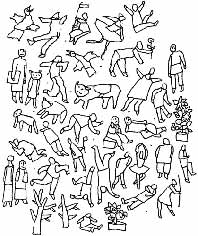 Art therapy can be individual, couple and group. We talked a lot about individual exercises, wrote about group techniques and almost nothing about working in pairs. Let’s fill in the gap.
This is one of the most beautiful games that fill your leisure time in boring meetings and boring meetings. Her main condition – to work without uttering a sound – just fits the situation when two people sit at a desk and pretend to listen carefully to the speaker, taking notes on something …
However, after you draw the entire notebook and return home – this is where your main work will begin – a slow analysis of fast handwriting.
You will review this notebook many, many more times, until, finally, the famous insight comprehends you – and you understand a lot about yourself and about the person who worked with you in pairs …
So, take a notebook and unfold it so that it appears before you in landscape format. Divide each page into two parts with a vertical bar. And then – start drawing together with your partner.
You need to draw quickly, without thinking, something like playing blitz chess.
Game one “The problem and its solution”
Quickly draw a picture of a problem on your half of the sheet.
Pass the notebook to your partner.
He, in turn, just as quickly, must draw a picture that shows how this problem can be solved.
Think of and draw ten problems, then switch roles. The partner will draw problems, and you will solve them.
Game Two “Dangerous Journey”
Draw on your part of the sheet a picture that depicts a Path with some Obstacles.
Pass the notebook to your partner.
He must draw ways to overcome these obstacles.
Additional instructions
Agree that each of the partners briefly but clearly sign each of his pictures.
You can also paint with two different colors, agreeing which color belongs to whom.
This rule will help you, over time, not to forget – with whom you played this game.
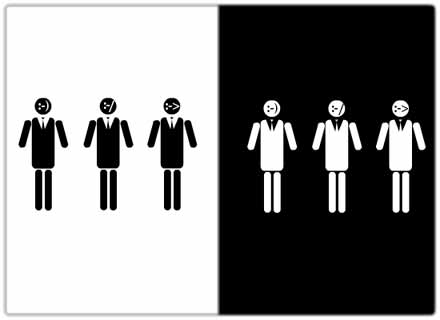
Draw very schematically, do not get carried away with picturesque drawing. Let your little men resemble little men on road signs.
When starting this game, do not plan in advance all the situations that you will draw – during the game, the flow of the unconscious should turn on – do not block it with your planning.
When you draw a problem – the faces of the little men are depicted as “sad” or “puzzled” emoticons.
When your partner solves a problem – he draws the faces of the characters as “smiling emoji”.
What will the “Problem” column say?
It will show, of course, what really excites a person – on a conscious or subconscious level.
What will column B say, “solution to problem B”?
She will tell you about how your partner is used to getting out of difficult situations, what he hopes for, how resourceful, creative.
In addition, you will see solutions that you probably would never have thought of on your own!
When you have accumulated a stack of such notebooks, looking through it in long free evenings can fully replace reading useful psychological literature for you …
Remember the condition? The partner who draws the problem does not explain what he meant – everyone guesses about something of his own.
Elena Nazarenko
practicing personal and family counselor
Articles on the history, fundamentals, applications, and various forms of art therapy can be found here.
Only the best offers, interesting company news, useful innovations and no spam!