


Art therapy
This is a quote from Asm’s post Original post
Although this method has recently been widely used in practical psychology, nevertheless, one often hears the question: What is mandala therapy?
In fact, answering this question is not so simple, although there are a sufficient number of materials on this topic. So what is mandala therapy? Art therapy technique? diagnostic method? Jung’s method of analytical psychology? Meditation technique? Spiritual practice? I propose to leave the terms and definitions alone, but to gain your own experience in this technique and form your own understanding of it. Well, let’s start from the very beginning.
Mandala for the state, problem, task, question
Before you is a sheet of white paper, an ordinary sheet of A4 or A3 format, on this sheet a circle is drawn with a simple pencil. Circle of the largest possible diameter for a given sheet format. Nearby is a palette of pencils, pastels or paints. You turn on calm music and, watching your breathing, gradually, more and more relax, filled with warmth and calmness. The eyes can be either closed or open, and you can contemplate the pure space of the circle, trying to keep your gaze inside the outlined space. When you feel that you have reached the maximum relaxation possible for you at the moment, then direct your inner attention to the problem, topic or life task that is most relevant to you now. Listen to your sensations in the body, maybe you will see some abstract or concrete images that will be associated with this topic. Listen to the feelings, sensations that this topic evokes in you.
Then smoothly direct your attention to the palette (pencils, pastels, paints) that lies in front of you. Notice which color came first, the color that caught your eye first. Trust it. And it doesn’t matter whether it is pleasant for you or not, fits into the logic of your topic or not – take it. Then bring your attention to the clear space of the circle. Take your time, let your eyes wander in this space, you can even move your hand or touch your finger in different places of the circle. Where will you start? Let not your logic choose, but your feelings, your hand. Perhaps you will have a ready-made image, but still, take your time, let your feelings and sensations lead in this process.
Now start creating with this color those forms and images that ask for expression, allow them to be, let them manifest, allow your hand and your inner impulses to lead. When you feel that this color-taste is enough, look again at the palette and note the response from the next color that you have chosen. Bring it to the circle and feel where, how much and how you want to fill with this color. So you need to fill the entire space of the circle. It is desirable that there are as few or no unpainted voids left as possible. It happens that at first you don’t quite like what happens, but at some point you pass the pass and you start to like the process itself – focus on this. SELF-expression. Put your aesthetic and artistic ideas aside and just let yourself express yourself.
In some cases, there is a need to throw out the accumulated emotions – let them manifest themselves in the process of drawing with that passion, with the pace and color that begs. It can be one color, such as black, red or gray. Let this color splash out in full force by sketching the whole circle with it, and maybe more than one. To do this, prepare several sheets with clean mandalas. At some point, you will take a clean circle and feel that you have freed yourself from superficial emotionality and choose a different color, and the hand will draw the shape of your new state.
If you didn’t have such an emotional outburst and you created a formalized image of your task or problem, then stop, stop the music, put the resulting mandala in front of you, and there are several options for working, depending on what is closer to you and where you are At the moment. If you are in a therapy, education, or art group, then work on the program for that group follows. If you are doing it on your own, then the most common way is to continue working in the same vein.
Tune in to your inner feelings, look at the finished mandala and highlight the leading feeling, sensation, maybe an image, a thought. Then listen, how comfortable are you in this? If you experience harmonious feelings of calmness, strength, confidence, concentration, a pleasant energy boost, then we can assume that the therapeutic effect of mandala therapy has been achieved and it remains only to consolidate it. In this case, some kind of analytical work is not always appropriate, and sometimes even harmful. It happens that already in the process of creating a mandala, an internal solution to the problem pops up or the next step is formulated to solve the problem. If it doesn’t pop up spontaneously, then grab a pen and a blank sheet of paper:
A series of mandalas for the transformation of the state
If this whole process of working with a finished mandala seems complicated enough to you, you can simply draw several mandalas in a row, especially if you work with paints and stop at the most resourceful and harmonious state. In this case, do not rush to draw any conclusions, just save this state. You can place the final, resource mandala in a prominent place in your room or workplace. After some time, you yourself will feel the changes that will begin to occur in you and your life and the moment when the need arises to create the next series of mandalas.
Coloring ready-made mandala shapes
The healing properties of creating complete images in the space of a circle have been known since ancient times. Moreover, both the process of creation itself and the contemplation of the resulting mandala or its location in a conspicuous place are healing, so that it catches the eye as often as possible.
At present, the so-called mandala proto-forms or simply mandalas for coloring are quite available. Such mandalas for coloring can be found both on the Internet and on the shelves of book supermarkets.
What is important to pay attention to here?
First of all, choice. Accumulate for yourself at least 15-20 such mandalas and from them select intuitively the one that resonates most with you at the moment. The choice can be made either by placing the mandalas face to face and feeling the response, examining the drawing, or by spontaneously taking the first sheet that comes across from the pile. There is no priority in one or the other way, just trust how you want to choose at the moment.
After that, an intuitive choice of color and place from which I would like to start coloring the mandala and further – This process is identical to what I described above, talking about creating a mandala for a state, problem, task, question. Only in coloring is it recommended to use pencils more often, or thin pastels, so that you feel as fully as possible the forms that you fill with color.
If in the process of coloring strong feelings and emotions rise, then give them a turn through enhancing the color and re-coloring the same mandala. The result of such work, as a rule, is a change in state to a more harmonious, calm, holistic one. If such a state is not achieved, then put this mandala aside, but after some time (in a day or two), nevertheless, return to it and repaint or repaint.
When coloring, a process takes place at the deep level of a person in which there is an opportunity to resolve internal conflicts and, as a result, change the state to a more resourceful one. Therefore, it is important to interact with the created mandala for a few more days, placing it in a conspicuous place or allocating a few solitary minutes a day to contemplate it.
These are just a few of the techniques in this method, but they seem to me to be the most effective. I deliberately did not give descriptions of the origins of this method, the classifications of mandalas and the types of their impact, so that your perception is as free as possible from these ideas and open to creativity in this individual path of self-knowledge. (c) Igor Bezruchko
Second day mandala
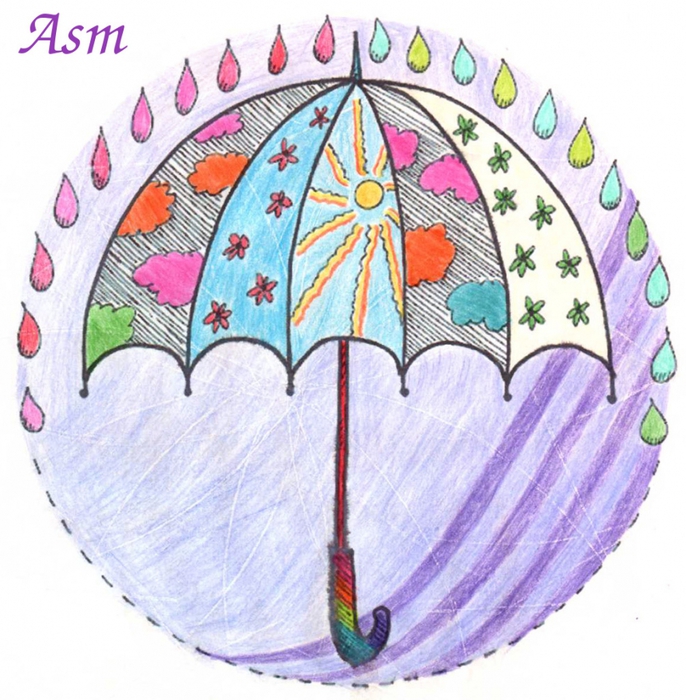
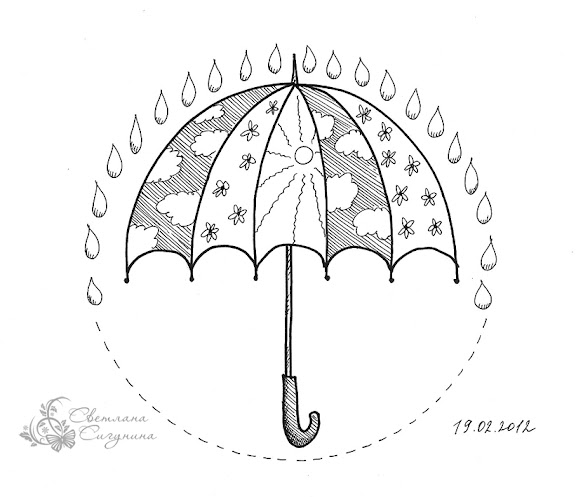
Based on a drawing by Svetlana Sigunina.
Series of messages ” My Mandalas “:
Part 1 – What is a Mandala
Part 2 – Mandala Therapy
Part 3 – Colors and shapes in the mandala
Part 4 – Colors and days of the week
Part 5 – Color exposure
Articles on the history, fundamentals, applications, and various forms of art therapy can be found here.
Only the best offers, interesting company news, useful innovations and no spam!